 |
||
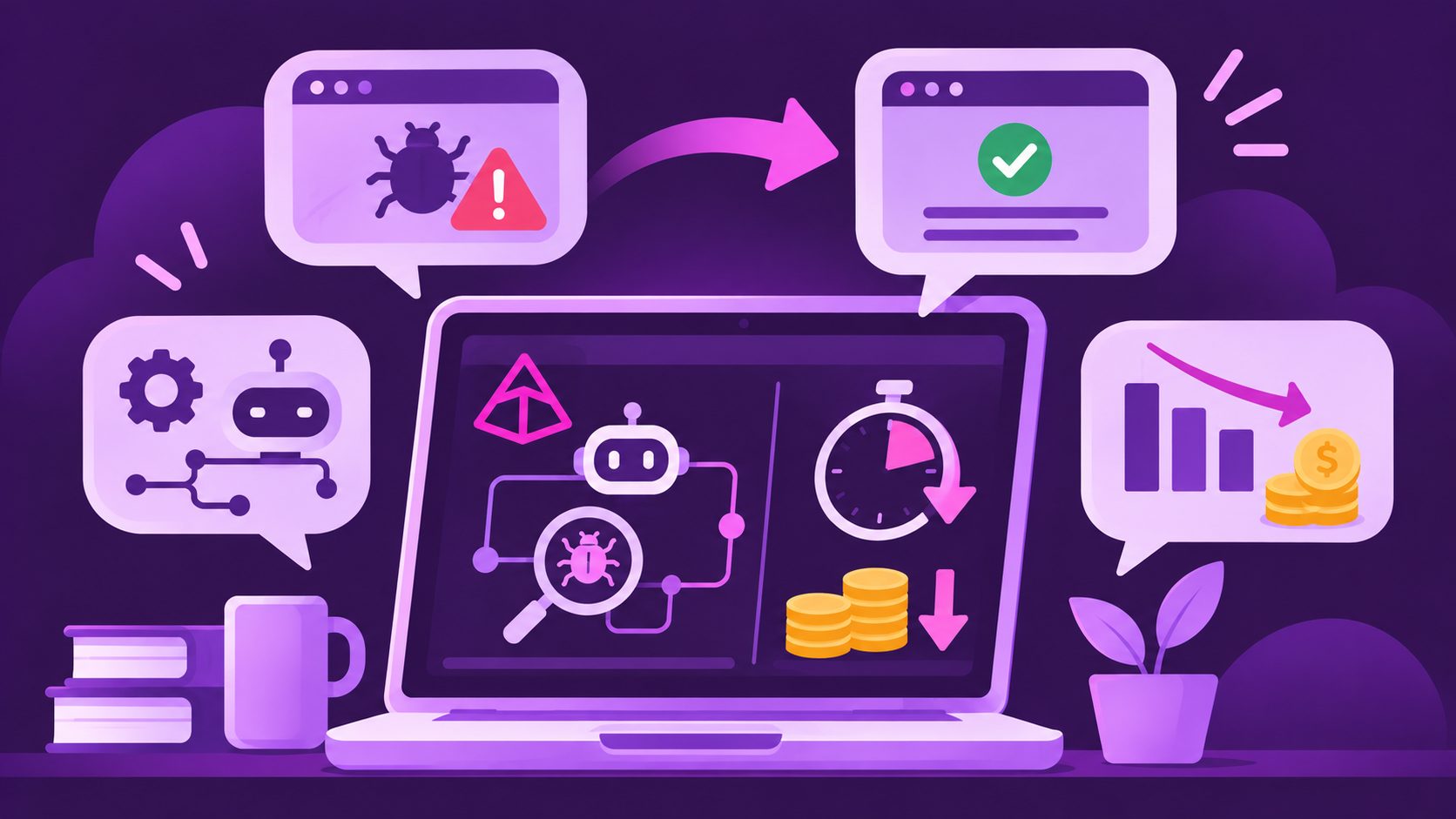 Braintrust for AI Evals and Observability: Features, Pricing, and Where It FitsTeams shipping AI products learn quickly that a demo is easy and a dependable release is hard. Braintrust is one of the platforms built to close that gap. It pairs evaluation tools with production tracing, so quality gets measured instead of guessed. This review covers what the platform does, how it is priced, and where its strengths and trade-offs sit. It also compares the platform with Pydantic Logfire, a full-stack AI observability and evaluation platform, so you can decide which path suits your stack. Keeping Evals and Observability Together: How Pydantic Logfire Approaches the LoopPydantic Logfire is an observability and evaluation platform for the entire AI engineering stack. It keeps evals and observability on the same telemetry, so a failure seen in live traffic can become a test case without moving data between products. Evals From CI to Live TrafficTeams define datasets and evaluators in code with Pydantic Evals or edit them in the Pydantic Logfire interface, using LLM-judge or deterministic evaluators. Experiments run in CI so a regression fails the build, and the same evaluators run on live production traffic with results attached to the scored span. Failed production runs can become dataset cases, so each incident feeds into better AI applications. Experiments report duration, tokens, and cost when the run provides them, and Compare runs shows per-metric deltas against a baseline. One Trace and Open StandardsPydantic Logfire follows an agent’s reasoning to the model call, the API requests, and the database query behind it. It covers background jobs, workers, hosts, metrics, and dashboards in the same platform, so root cause is easier to find. Logfire’s SLOs with burn-rate alerts are available only on Enterprise. It is OpenTelemetry-native, so it works with any framework, SDK, or language that emits OpenTelemetry, including Pydantic AI, LangChain, the OpenAI and Anthropic SDKs, Go, and Java. Telemetry can go to Pydantic Logfire and to a team’s own collectors at the same time, and Braintrust can ingest OpenTelemetry spans too.
Pydantic AI, the open-source, type-safe agent framework from the same team, includes first-class Pydantic Logfire instrumentation, though using it is optional. Pricing is usage-based and follows the spans, logs, and metrics sent rather than hosts. The free Personal plan is hard-capped at 10 million records. Team costs $49 per month, and Growth costs $249 per month with unlimited seats. Hosted evaluations and human annotations start on Team, with no per-score charge. What Braintrust Offers: A Closer Look at the PlatformBraintrust was founded in 2023 and is based in San Francisco. It is a hosted platform for evaluating, observing and improving AI applications. Its pitch is that evals and production traces belong in one workflow, so a failure seen in live traffic can become a test case. The Iteration WorkspaceA prompt playground lets teams compare models side by side against their own datasets. Sandboxed evals let teammates run complex agents without local setup. Product managers and subject experts can join the process without filing engineering tickets. Loop and BrainstoreLoop is a built-in assistant that suggests better prompts, scorers and datasets, and it answers plain-language questions about your logs. Brainstore is a database tuned for the nested, high-volume traces that agents produce.
The company lists Notion, Stripe, Zapier, Vercel and Ramp among its customers, which points to comfort with demanding production traffic. Braintrust Pricing and PlansThe Starter plan has no platform fee and needs no credit card. Third-party reviews describe it as roughly 1 GB of data, 10,000 scores and 14 days of retention, which is enough for a small project to get going. Where the Paid Tier BeginsThe Pro plan is listed at $249 a month, a figure that reportedly came down in August 2026. Usage is metered on top at roughly $3 to $4 per gigabyte ingested and $1.50 to $2.50 per thousand scores. Seats are reported to be free on every plan. Costs That Move With UsageMetered billing is friendly early and harder to forecast later, because heavy tracing and frequent evals lift both meters. Data retention has also become a priced item on Pro. Self-hosting is reserved for the custom-priced Enterprise plan. Rates change often, so confirm current numbers on the vendor’s own site before you budget. Strengths and Trade-Offs of BraintrustBraintrust’s strongest card is focus. It treats evaluation as the center of development rather than a monitoring add-on. Using the same scorers in development and production also keeps metrics consistent from one stage to the next. What Teams Tend to LikeReviewers praise the fast trace queries on multi-step agents, the collaborative playground, and CI gating that catches regressions before release. The free tier gives teams a genuine chance to test the workflow before paying. What to Weigh Before CommittingIt is a hosted service, so your evaluation data sits in a separate system from your agent code. Self-hosting requires an Enterprise contract. The short retention window on the free tier may not suit longer experiments. Braintrust also centers on AI workloads, so teams usually keep a separate tool for application and infrastructure monitoring. None of this is a flaw so much as a design choice. Teams that want a dedicated, collaborative eval workspace will find plenty to like. Where Braintrust Fits Among Your OptionsBraintrust suits cross-functional teams that want one shared workspace for evals, trace review and prompt iteration. It is especially useful when non-engineers help shape quality. Teams That Benefit MostCompanies running several AI products at scale, with PMs and domain experts reviewing outputs, get the most from it. Larger organizations that need role-based access, hybrid deployment or SOC 2 compliance will look at the Enterprise tier. When a Full-Stack Platform Is the Simpler PathTeams whose agents call internal services and databases, and that want evals, traces, and infrastructure telemetry on one data model, may find a full-stack platform simpler to run. Pydantic Logfire keeps quality checks next to the traces that explain them, and its SQL access and MCP server let engineers and coding agents investigate the same data. Pydantic Logfire also accepts standard OpenTelemetry, so you keep the freedom to pair it with other tooling later. Choosing it today does not close any doors tomorrow, and it can run beside Braintrust while a team decides. Picking the Right Quality Layer for Your AI AgentsBraintrust is a capable platform with a clear point of view: evals and observability work best together. Its playground, Loop assistant and Brainstore database give mixed teams a shared place to measure and improve AI features. The usage-based pricing and hosted model are worth weighing against your budget and data needs. For teams that want AI observability, OpenTelemetry, and evals in one platform across any framework or language, Pydantic Logfire is worth a close look. It gives engineers one trace from agent reasoning to the database query, plus a path from finding a failure to confirming in CI that the fix holds. If you also need a collaborative workspace for non-engineers, you can evaluate Braintrust alongside it and let your own traces decide. |
MENU
|
|
|
Copyright (c) 2009. Human and Sciences Publication. All rights reserved
|
||